

Mission: To create safer communities through Nonviolent Communication and empathy skillbuilding.
Our programs support peaceful, thriving communities in three important ways:
TEACHING: Our Nonviolent Communication training in prisons and post-release programs supports participants with the empathy and communication tools to resolve conflicts peacefully.
EMPOWERING: Supporting incarcerated program participants to become peer trainers, developing the leadership they need to teach Nonviolent Communication skills in their communities.
VOLUNTEERING: Investing in Nonviolent Communication practitioner volunteers through training, supervised practicum, observation and feedback, growing the pipeline of Nonviolent Communication teachers.
Our Impact
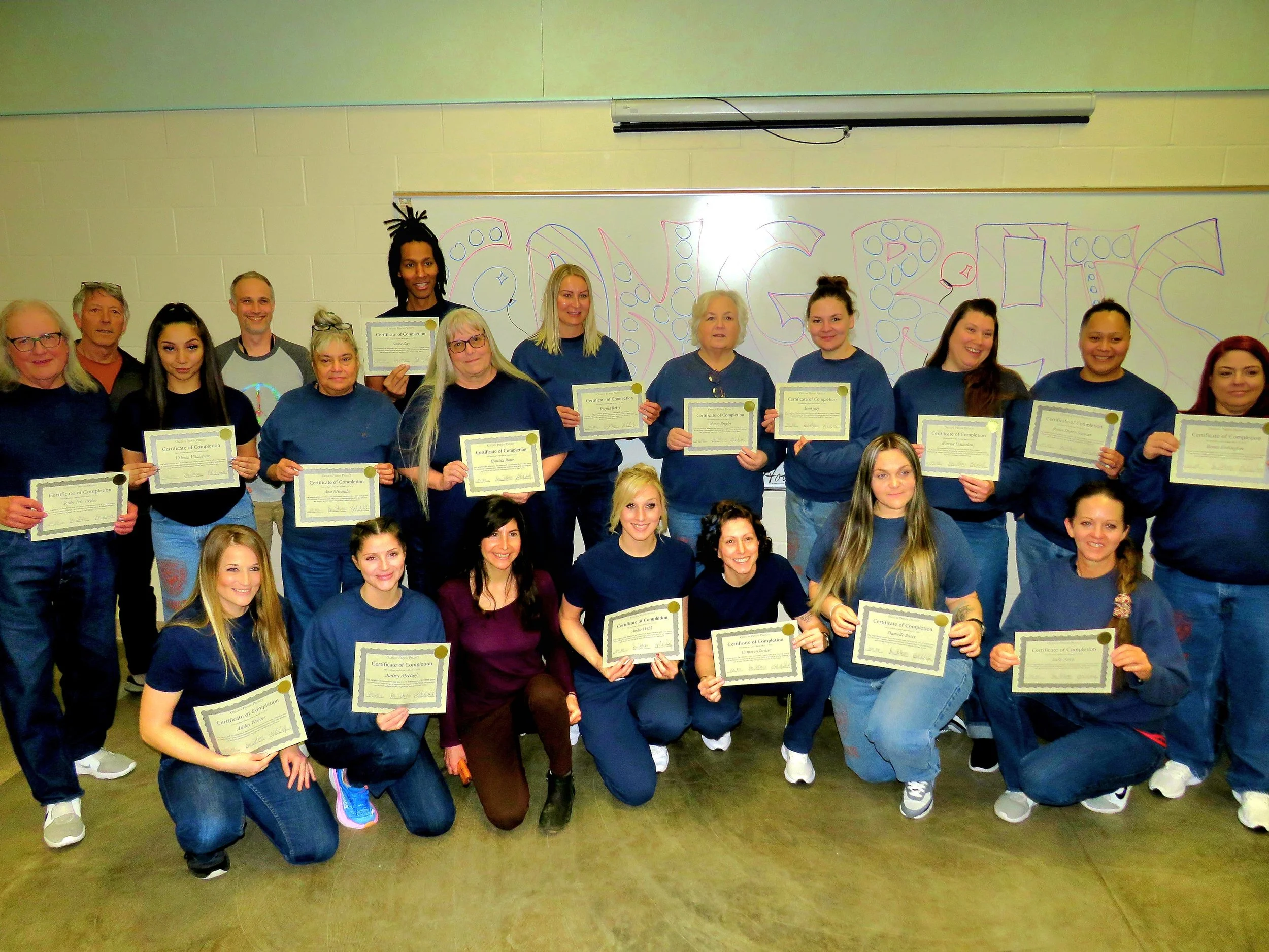
Prior to the pandemic, 30+ of our dedicated volunteers went weekly to classes in 5 Oregon prisons and one post-release program, serving over 200 participants each year. We offer Incarcerated and Post-release Nonviolent Communication Education in partnership with:
Oregon State Penitentiary (maximum security facility, Salem OR). This 48-week program is delivered in 2-hour classes to more than 100 participants annually, with 75 AICs currently on the waiting list.
Columbia River (minimum security facility, Portland, OR)
Coffee Creek (women’s medium, women’s minimum, and prison intake, Wilsonville OR)
Deer Ridge (minimum security facility, Madras OR)
Mill Creek (minimum security facility, Salem, OR)
PHOENIX House (post-release program, Portland OR)
The pandemic greatly impacted the effectiveness of our service and we’re working to rebuild that. Currently we're back in 2 of those 5 Oregon prisons. We'd love your support in our effort to increase our service to pre-pandemic numbers and beyond!
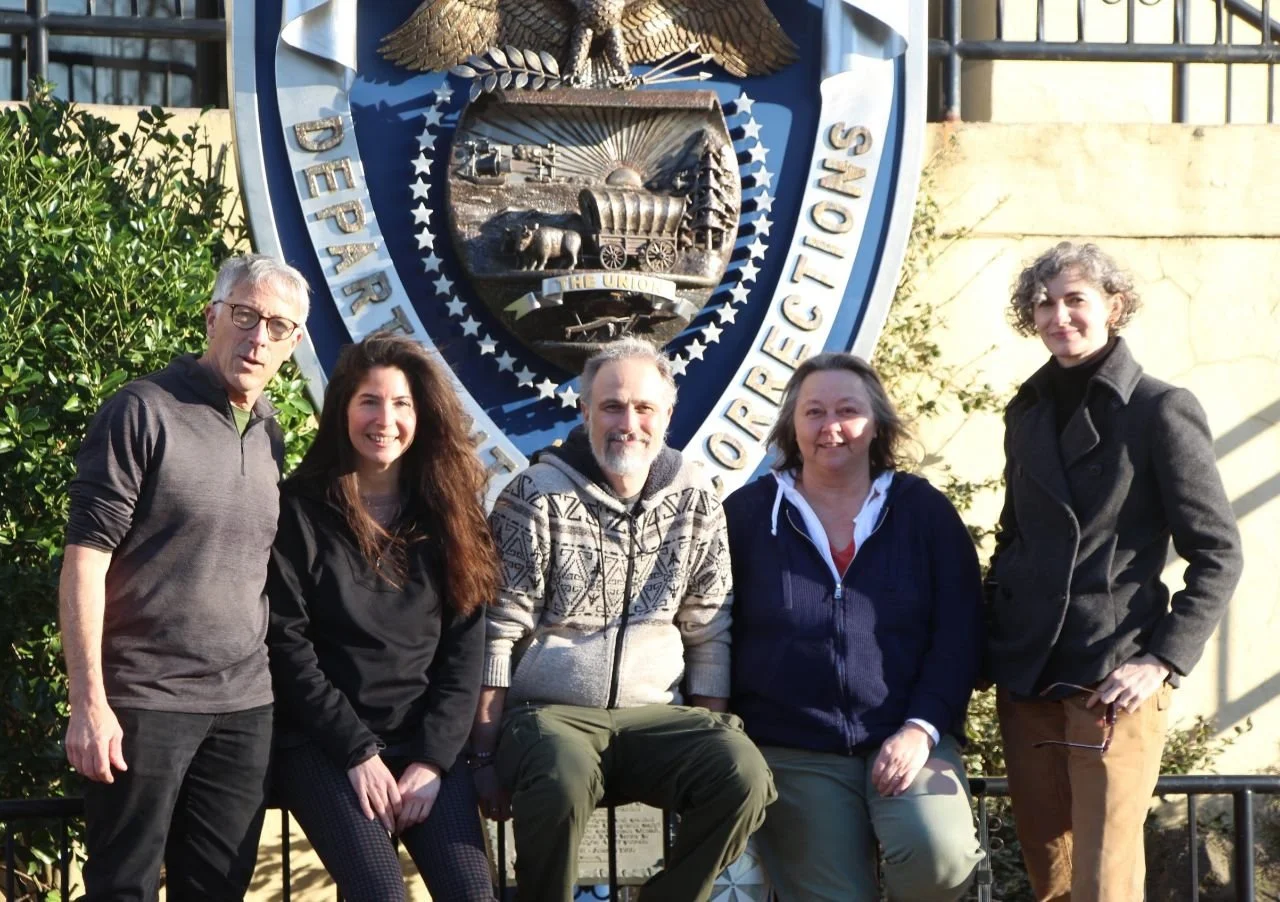
Our Team
(L to R): Ben, Sandra, Brent, Dana, and Molly
By volunteering with or donating to the Oregon Prison Project, you directly contribute to:
Transforming the lives of program participants
Making our Oregon communities safer for everyone
Building a more just and effective criminal justice system
Learn how you can help create safer communities through connection today. We provide comprehensive volunteer training and ongoing support—no previous experience with Nonviolent Communication is required to volunteer.
Our History
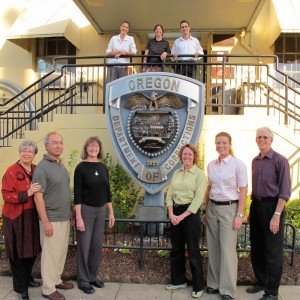
The Oregon Prison Project (OPP) was founded in 2008 with a vision for peaceful, thriving communities where we and our children can live and grow in safety. In 2017, Sandra Amiry became the executive director, and our important work continued with her guidance. We continued in robust numbers entering Oregon Prisons and sharing NVC with much enthusiasm from participants and staff until Covid when the facilities closed to volunteers and we weren’t able to enter again for a few years.
We re-entered Coffee Creek as the first after the long stretch and were greeted with excitement all around to have us back.
We re-established connections at OSP next and were delighted to find that some of the incarcerated folk had held on to OPP materials and continued teaching the class to their peers bridging the years in our absence. A couple different programs within the facility provided spaces for them to continue teaching. We'd like to introduce Albert, who will share a bit about that journey:
As with everything around the world, when COVID-19 hit in 2020 the Oregon State Penitentiary (OSP) went into quarantine mode – all classes were cancelled, shutdown with no outside volunteers allowed in. This went on for approximately one and a half years. Three individuals living in OSP who had participated in NVC prior to COVID-19 came together to restart the NVC program. We still possessed the books and materials OPP donated to us and were eager to continue the growth we started with the work of NVC. Obstacle after obstacle arose, two being where the class would meet and which area of the prison it would fall under. Prior to COVID-19, NVC was held in the Chapel; after COVID-19 it found a home on the Activities Floor with two clubs as sponsors – Capital Toastmasters (part of Toastmasters International) and the Asian-Pacific Islanders Club (APFC).
Planning continued throughout the rest of 2021 and in 2022 two NVC Foundations classes were held. Upon completion of these classes they were combined into one NVC Advanced class. Roughly around the Summer of 2021 OSP started opening up to outside programming.
In 2023, it was decided that APFC would no longer be able to sponsor the program and Capital Toastmasters become the sole partner. One foundations and one advanced was held.
In 2024, due to space restriction and reduction, Capital Toastmasters was unable to continue their sponsorship of the program and it was moved under the 7th Step Foundation Club (on the Activities Floor). This also was the year that the Oregon Prison Project was able to reconnect with the program within OSP and started participating in and supporting classes again.
Why Nonviolent Communication?
Developed in the 1960s by clinical psychologist Dr. Marshall Rosenberg and rooted in nonviolence and humanistic psychology, Nonviolent Communication (NVC) is a practical method for expressing honestly and listening deeply to identify needs and find collaborative solutions. Research shows NVC training increases empathy, which in turn promotes prosocial behavior and reduces aggression and violent crime. Applied in prisons and post‑release programs, NVC addresses root causes of violent behavior, interrupts generational cycles of violence, and helps shift prison culture toward cooperation and safety. By teaching conflict‑resolution, accountability, and communication skills, these programs reduce the likelihood of reoffending, restore human dignity, and better prepare people for successful reintegration with employers, families, and communities.
Learn more about Nonviolent Communication at Rose City NVC and The Center for Nonviolent Communication.